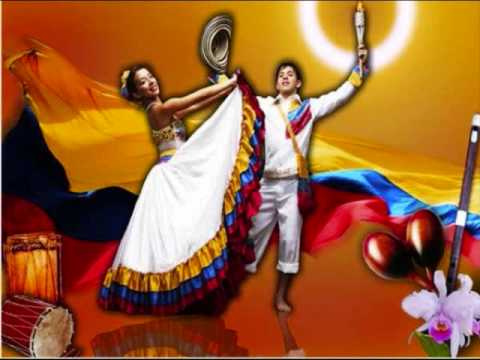
Cumbia is a music style that originated in Colombia's Caribbean coastal region. Cumbia began as a courtship dance practiced among the African slave population that was later mixed with European instruments and musical characteristics. Cumbia started in the northern coast of South America, what is now Colombia and Panama, mainly in or around Cartagena during the period of Spanish colonization. Spain used its ports to import African slaves, who tried to preserve their musical traditions and also turned the drumming and dances into a courtship ritual. Cumbia was mainly performed with just drums and claves.
Showing posts with label Cali. Show all posts
Monday
Traditional Dancing Cumbia, Cartagena Colombia
Cumbia is a music style that originated in Colombia's Caribbean coastal region. Cumbia began as a courtship dance practiced among the African slave population that was later mixed with European instruments and musical characteristics. Cumbia started in the northern coast of South America, what is now Colombia and Panama, mainly in or around Cartagena during the period of Spanish colonization. Spain used its ports to import African slaves, who tried to preserve their musical traditions and also turned the drumming and dances into a courtship ritual. Cumbia was mainly performed with just drums and claves.
Labels:
bolivia,
Cali,
canal,
Carthagena,
colombia,
dance,
dancing,
drums,
ecuador,
kansantanssi,
mexico,
music,
panama,
paraguay,
singing,
song dance,
venezuela
Friday
Aphrodisiacs in Cali, Colombia

Photo via Flickr user Mario Carvajal
I meet Guillermo at a pizza parlor in San Antonio, the colonial part of Cali, Colombia, popular with young gringos and Europeans. As we get to talking, it turns out Guillermo lived in NYC for four years, he's into heavy metal, and he's a dealer. After finishing our pizza we walk over a few blocks to his apartment in El Centro where we enter through a small dry goods store. While he opens up drawers and pulls out different-sized plastic envelopes containing acid, ecstasy, cocaine, pot, and opium, Guillermo's mother walks back and forth, attending to customers who've come to buy sugar, chocolate milk, beer, and cigarettes.
I buy a gram of near-pure coke for $5 dollars, though it's mostly out of politeness. The fact is, I'm after another drug that's a lot harder to come by, and Guillermo is one of the only dealers in Cali who stocks it.
After Guillermo packs up the recreational drugs, he reaches over, grabs a knapsack and starts pulling out dozens of exotic little pillboxes. He gives me the lowdown on the effects of each of them and in the end I choose a black bottle (for $20 dollars) with its brand name written in Chinese, Korean, Arabic, and Russian and illustrated with silhouettes of two golden kangaroos. Inside, there are ten golden pills in the shape of Australian boomerangs. The instruction pamphlet in the box explains that these pills "...trigger love fire through expanding and comfortable swelling...."
It's not that I need "love fire" in a pill (I'm still a hard-working man with plenty of piss and vinegar in me), but I'm up to giving it a run with my local lady friend just for kicks. According to Guillermo, when he first started selling sex stimulants there was a stigma attached to the pills that only sexually inadequate men needed them, but now men of all ages and sexual preferences are popping pills in front of their lovers as part of a normal, healthy sex life.
It's hard to generalize about cities and cultures, but there are several reasons why caleños might very well enjoy more, better sex than people in most cities around the world. The fact that Cali enjoys intense year-round tropical heat, allowing locals to strut around in their skimpiest clothes; that even strangers call each other papi, mami, and amor; that most everyone learned to dance salsa when they were children and are thus great movers and shakers; that the cocaine produced here is pure and cheap; the fact that prostitution is legal and there are dozens of whore houses for all wallets; and that there are affordable, extravagant love motels all over the city, surely ups the level of sexual activity in this town.
In addition to the traditional places where people make love, sex in and around the city is so common that there is a name, desnucadero, for the myriad places, such as abandoned buildings, construction sites, dark alleys, etc, where people sneak in for a quick hump; a local term for quickies in public places, bluyinear, which means fucking with your blue jeans on; and a new trend called dogging, where young people agree on the internet to meet in local parks for sex.
These natural sex pills are mostly made in Asia, but they also work wonders for the racially diverse men in this tropical, sexually-saturated city. Caleños have long consumed their own local aphrodisiacs including natural products such as bananas, coconut, a fruit named borojol, and the homemade sugarcane alcohol named viche (one variety of which is called tumba catres, bed-breakers). In addition, local markets sell magic products, such as powders, sprays, lotions, and candles (one in the shape of a large black dick with balls) designed to help both men and women dominate their lovers and give them superpowers in bed.
Nonetheless, these days, global corporations peddling pharmaceuticals engineered to increase blood circulation in male genitals have penetrated sexual activity across the globe, including way down here in the southwestern corner of Colombia. Men in Cali increasingly look to modern corporate chemistry to give their sex life a lift.
Although men in the West seek help from pharmaceuticals, in the East there are hundreds of products that claim to be composed of natural ingredients that traditional healers have been prescribing for thousands of years to keep men and women happy, healthy, and sexed-up. China's ancient herbal and animal aphrodisiacs repackaged in modern pill form have recently become a huge export industry, and in the last decade sales of natural sexual enhancers have tripled.

Photo via Flickr user Julian Fong
Nearly every drugstore in Cali sells Viagra and half a dozen cheaper generic varieties over the counter. While local sex shops in the city sell some alternative Viagra, few sell natural sex products from Asia, leaving Guillermo a window of opportunity. In the 90s, inside an upscale mall, Guillermo tells me he ran one of the city's only sex shops in Cali, selling inflatable dolls, handcuffs, and remote controlled vaginas (there are sex shops all around town servicing the city's population of two million). Although he no longer has a sex shop, Guillermo still sells a long line of lubricants, delayers, dilators, and dildos, as well as more than a dozen varieties of Asian sex stimulants he says are smuggled in from Hong Kong through the coastal town of Buenaventura.
Asian sex pills claim to be made from natural products that include a wide variety of plants, such as wolfberry and saffron, though ginseng, which often grows in exotic seductive shapes that resemble curvaceous women and worth their weight in gold, tends to be listed as the main ingredient. My gold pills, however, announce that they contain not only plants but also powder derived from some very sensitive parts of some very exotic animals, including "testicle of yak, sea horse penis, sea dog penis, snow deer penis, tiger penis, snake penis, Tibetan mastiff penis, Tibetan goat penis, and Tibetan donkey penis."
It's hard to know what these pills really contain since there is no industry oversight of herbal treatments. Many of them start working their magic in under half an hour, basically the same as Viagra and other pharmaceutical stimulants. Pfizer, the manufacturer of Viagra, has long accused Asian natural sex stimulants of being laced with sildenafil, their wonder pill's main ingredient, and the powerful pharmaceutical lobby applauds when the FDA bans or recalls "herbal" pills containing active substances found in patented sex products.
According to NBC, a study by Pfizer estimated that 69% of more than the 3,000 Asian sex pills they tested were laced with patented lab compounds, but it's hard to swallow such statistics knowing that pharmaceutical corporations will go to great lengths to crack down on competition, especially natural, lower-priced alternatives.
Even when they are not adulterated, laboratory-produced chemical compounds that enhance the functioning of the male sexual organ are known to produce such side effects as headaches, flushed faces, nasal congestion, nausea, irregular heartbeat, tremors, changes in blood pressure, visual disturbances (such as difficulty distinguishing between green and blue), chest pain, and can lead to more serious complications when used in conjunction with other pharmaceuticals or stimulants.
With so much uncertainty surrounding the ingredients of both over-the-counter and under-the-radar pills, and with so many cultural, social, and economic concerns, what's a man to do? Obviously, go for the cheapest ones in the coolest bottles designed with the most potent images (one box has an image of Godzilla and Mothra going head to head in battle), accompanied by the most evocative results ("to quicken blood flow to cells in male cavernous body").
In the end, despite possible health risks and risks to endangered species, for me it boils down to whether these pills work. The golden pill I pop has me up and ready in about 20 minutes, and keeps my member standing at attention for hours of great sex. It's exciting to achieve the much announced "bigger, stronger, harder, longer," though I'm quite aware that a big boner doth not a great lover make. Although I've probably just consumed some form and quantity of pharmaceutical substance along with other ingredients of unknown origin, I am grateful that by merely swallowing a miniature golden boomerang from a bottle decorated with kangaroos and beautiful Chinese characters I was able to achieve what my pills' instructional and poetical pamphlet guaranteed in five different languages, the "infinite tremendous."
Source: Vice.com
Labels:
aphrodisiacs,
asia,
Cali,
colombia,
drugs,
men,
penis size,
sex,
sexual stimulants,
south america,
stamina
Cali: Travel Guide
Vacations to enjoy with the Spirit of Youth
Cali's Salsa is known all around the world, another activity to enjoy during your vacations
Get to know Cali, Colombia thru this travel guide; where you will find culture and top tourism activities.
Cali is known in Colombia as the capital of fiestas, street partying, dancing, and salsa as Cali's Salsa Clubs are among the most famous in the entire continent. Among many other things you can experience on your vacations, the people from Cali have developed a playful and hedonistic culture in harmony with the natural surroundings and country life.
Cali is a great place for tourism and leisure. The capital of the department of Valle del Cauca has become a mecca for tourism thanks to the beauty of its women, its historical sites, and a multitude of spots for day and night entertainment. Cali is one of the major economic and industrial centers of the country, and the main urban, economic, industrial, and agrarian city of southwest Colombia.
In Cali, salsa dancing is more common than walking
On Sundays, the caleños worship rivers. They go en masse to bathe in the cool streams and rivers that flow down the hills, the favorite being the Pance river. The daring walk upstream to the campgrounds of the Fundación Farallones, where guides are always ready to tour the park with visitors. Lodging is available for extended stays in the park.
Cultural activities for holidays
In the evening, the devotion turns to dancing. In Juanchito, Cali's Salsa hotspot, humble mulatto floorboards have become “dance-o-dromes”, where tourists and locals come together to dance until dawn. The climax occurs during the Feria de la Caña and the Bullfighting Season, at the beginning of the year.
Cultural activities flourish around centers like the Instituto Departamental de Arte y Cultura, the Instituto Popular de Cultura, the Teatro Municipal, the Museo de Arte Moderno La Tertulia, the Sala Beethoven, the Escuela Departamental de Teatro, and the Universidad del Valle.
The traditional cuisine of Cali and the department of Valle del Cauca can be easily identified. It is a fusion of the region’s Spanish, Quechua, and African heritage with the culinary secrets of Antioquia. Favorites are the sancocho de gallina (hen stew), arroz atollado (pork sausage, beef ribs, and oxtail in a rice stew), tortilla soup, aborrajado (ripe plantain with melted cheese), toasted green plantain with hogao (a stir-fry of onions and tomatoes), and tamales. Sugarcane plantations inspired a variety of desserts such as cookies, manjar blanco, gelatina de pata (cow’s hoof gelatin with molasses), coconut sweets and champús, a beverage made from corn, the pulp of the lulo fruit, pieces of pineapple, cinnamon, and brown sugar syrup.
Basic tourism tips for your vacations:
Climate
The climate of Cali is equatorial tropical hot. The west branch of the Andes blocks the cool, humid air coming from the Pacific Ocean. Average temperature is 26º C (79º F), with an average low of 19º C (66º F) and an average high of 34º C (93º F). The dry seasons go from December to March and from July to August; the rainy season go from April to June and September to November.
Altitude
1003 meters (3290 ft.) above sea level.
La Ermita Church, Cali
Location
Cali lies on the west bank of the Cauca River. To the west, the city is guarded by the Farallones de Cali, which are part of the western Andes mountain range. The city is located in a strategic position, linked to the west with the Pacific Ocean and to the northeast with the industrial city of Yumbo.
Airport
Cali has one of the main airports in Colombia, the Alfonso Bonilla Aragón International Airport (CLO), located in the municipality of Palmira, a fifteen minute drive north of the city. CLO is the second busiest airport in number of passengers and the fourth in freight traffic in Colombia.
How to get there
By plane, through the Alfonso Bonilla Aragón International Airport. An extensive road network, which includes the Pan-American Highway, connects Cali to the rest of the country.
Mass Transport
Buses, taxis, and vans add up to 43,000 public service vehicles. All taxis are yellow. The names of bus companies go by colors, Blancos y Negros, Azul Plata, Rojos y Grises (white and black, silver blue, and gray red).The capacity of vans ranges from ten to twenty passengers. In the near future, a bus-lane based transport system, the MIO, will begin operations.
Contact
Oficina de Turismo Cali
www.caliturismo.com
Phone: + 57 (2) 885-8855
www.caliturismo.com
Phone: + 57 (2) 885-8855
The Basilica of the Lord of Miracles, Buga
Escapades near the city
While in Cali, Colombia the traveler should not miss visiting the Hacienda Piedechinche, in the municipality of Santa Elena. This is where the sugarcane museum is housed, actually a theme park for displaying of the evolution of sugar mills. It offers rides on a sugar train and horseback rides through fields of sugar cane.
Another must is a visit to Hacienda El Paraíso, the house where writer Jorge Isaacs and his cousin lived. Isaac’s cousin was the inspiration for María, the name of the main character, as well as the name of the book, that epitomized Colombian romantic literature. The rooms with his personal effects, the blooming rose garden, and the wishing stone are carefully preserved.
For Catholics, there is a pilgrimage to the city of Buga, the site of the Lord of Miracles
An essential pilgrimage takes Catholics to the town of Buga, with its Crucified Christ — known as “the Miraculous” —, which lies in the Basilica. Another reason for traveling to Buga is a visit to the well-preserved 75-hectare tropical dry forest of El Vínculo. Situated at the foothills of the central mountain range, it shelters a wide variety of local fauna and is the seat of a biological station by the same name.
On the way to Madriñal, visitors can admire the Sonso lake, which covers an area of 2,045 hectares that provide sustenance for fishermen and their families and food for migrating birds coming from the northern hemisphere.
The road that goes west to connect Buga with the port of Buenaventura, on the Pacific coast, crosses areas of notable interest for tourists. The Calima lake, for instance, is the reservoir with the third strongest winds in the world, a water-sportsman’s paradise.
This is also an area of considerable archaeological interest. The Calima archaeological museum merits a tour to admire the figures, pottery, and burial urns of the Yotoco, Sonso, Malagana, Buga, and Bolo, or Quebrada, cultures.
And there are many reasons to go north. In the village of Roldanillo, the Omar Rayo museum exhibits the pictorial work of this artist and other Latin Americans. Following the visit, you can visit the vineyards of the municipality of La Unión. In addition to the wineries, there are two hotels, one in the style of a luxury vacation center and the other, more discrete, in a typical house of the region.
Calima Lake near Cali, Colombia
Travel guide along the Pacific Coast of Valle del Cauca
Read the following travel guide to get more information onCali , Colombia’s surroundings.
Empty boats bob up and down at the tourist wharf in Buenaventura; when they fill up, they go northward without delay to the place where the bay ends and the coastline of Valle del Cauca is lined with spectacular beaches bathed by the Pacific Ocean.
Travelers accustomed to sailing take the seats at the stern; they know that the fury of the ocean continually lifts the prow of the boat causing a difficult journey. Besides, sitting next to the helmsman is an opportunity for listening to the stories of the area.
Málaga Bay — home of a naval base — has 32 islands and islets that constitute the archipelago of La Plata and offer humpbacked whales food and the ideal temperature for mating. At the northern end of Buenaventura bay is La Bocana, a village inhabited by Blacks and bathed by the Dagua and Anchicayá rivers, which form freshwater pools and cascades along the Santa Clara path.
Not far is Paradise Island, a floating islet with beaches that are red due to the huge number of red crabs that inhabit them. Piangua is a hamlet where gentle waves and solitary beaches allow visitors to be at one with nature.
Another appealing place in the Valle del Cauca is its Pacific Coast, which has destinations such as Málaga Bay, Paraíso Island, Isla Palma Park and Cangrejal Island
The attractions of Juanchaco are not so evident and, paradoxically, this makes the village memorable. It is the gateway to Isla Palma park, a large forest-covered rock that is the feeding ground for a large population of aquatic birds and is surrounded by a sea of many shades of green — surprising hues that result from the absence of rivers spewing sediment into the sea.
From Juanchaco you can travel to Chucheros, a beach of black sand bathed by a green sea, where a crystal-clear waterfall tempers the saltiness of the ocean. Close by is the 65-meter Sierpe waterfall, part of the Bonguito river, in the rainforest north of Málaga bay.
However, the best thing to do is to take the path that goes from Juanchaco to Ladrilleros, a hamlet where life moves to the rhythm of the tides and most houses serve as hotels, restaurants, or crafts shops. At high tide, the place becomes a reef with streams that enter the forest, forming freshwater pools and waterfalls; at low tide, it becomes a romantic place that inspires you to walk along the seashore or spend the entire afternoon in a lounge chair.
Another charming destination is Cangrejal island, located to the south of Buenaventura bay. The beaches there are narrower, but the water is very clear. Estuaries and watercourses like the Yurumangui River take you to where the Emberá Indians live.
Subscribe to:
Posts (Atom)